
This image is copyrighted By Heritage Trust / SFRD
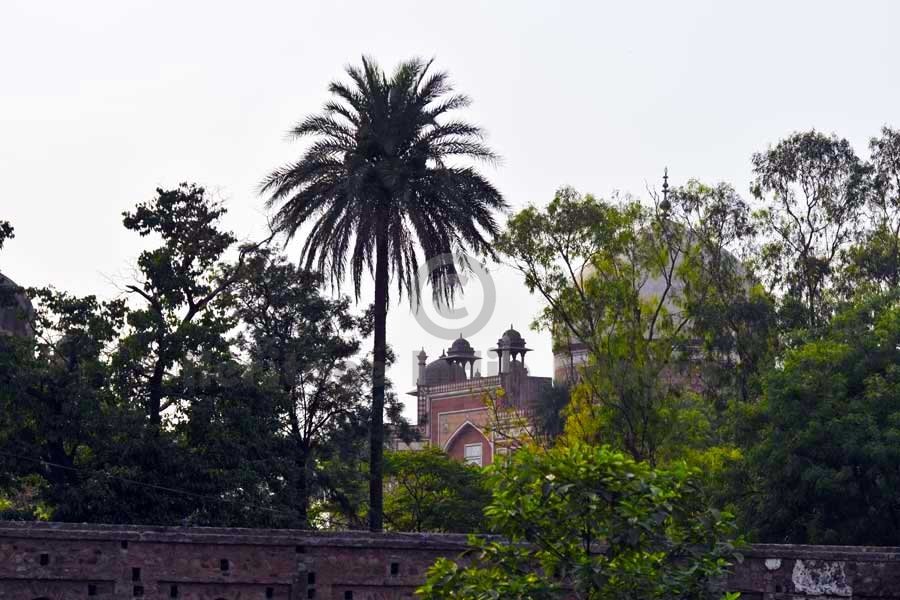
The tomb was commissioned by Humayun’s first wife Bega Begum (Haji Begum) in 1569-70, eight years after his death. It was completed in 1572 A.D. It is the first substantial example of Mughal architecture with high arches and double dome, which occurs for the first time in India. It is also the first mature example of a garden-tomb on charbagh pattern, which culminated in the Taj Mahal at Agra. The high rubble built enclosure is entered through two lofty double-storeyed gateways, one on the west and the other on the south. A baradari (pavilion) occupies the centre of the eastern wall and a hammam (bath-chamber) in the centre of northern wall. Its enclosure has a square garden divided initially into four large squares separated by causeways and channels, each square divided again into smaller square by pathways (charbagh) as in a typical Mughal garden. The lofty mausoleum is located in the centre of the enclosure and rises from a podium faced with series of cells with arched openings. The central octagonal chamber containing the cenotaph is encompassed by octagonal chambers at the diagonals and arched lobbies on the sides, their openings closed with perforated screens. Each side is dominated by three emphatic arches, the central one being the highest. This plan is repeated on the second storey, and the roof is surmounted by a 42.5 m high double dome of marble with pillared kiosks (chhatris) placed around it. The structure is built with red sandstone, but white and black marble have been used to relieve the monotony, the latter largely in the borders. It was also the first structure to use red sandstone at such a scale.The tomb was declared a UNESCO World Heritage Site in 1993, and since then has undergone extensive restoration work. Besides the main tomb enclosure of Humayun, several smaller monuments dot the pathway leading up to it, from the main entrance in the West, including one that even pre-dates the main tomb itself, by twenty years. The location of Humayun's tomb was so chosen owing to its closeness to the sacred Dargah of Delhi's greatest Saint Hazrat Nizmuddin Auliya.
Image Usage Terms & Restrictions : All images on this website are copyrighted and are the sole property of www.heritageindiaIimages.com. All use and/or publication rights are reserved worldwide. Image use is subject to the issuance and payment of an image use licensing agreement. You may not take, use or copy any image from this website without reading and complying with the terms.


