
This image is copyrighted By Heritage Trust / SFRD
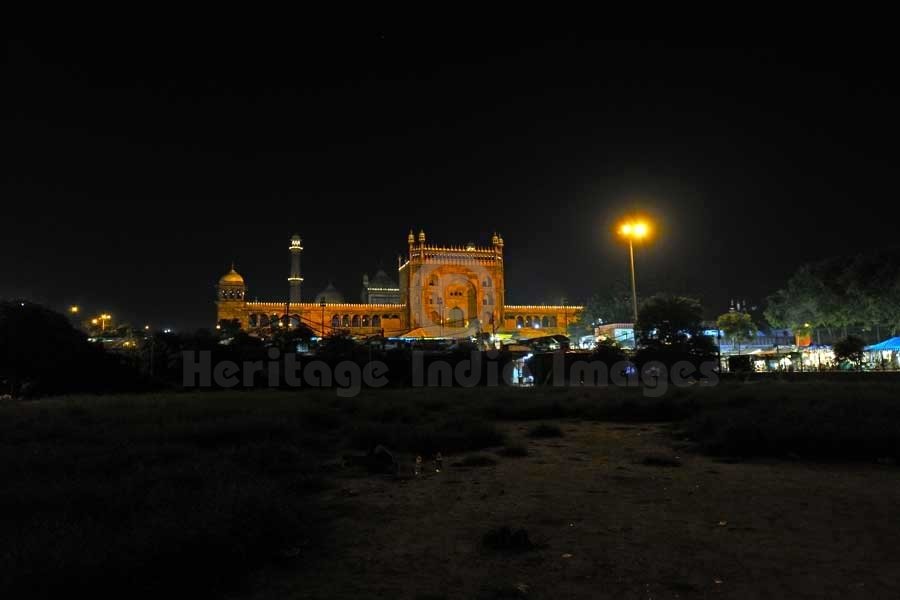
The Masjid-i Jahan-Numa, the world-reflecting Mosque, commonly known as the Jama Masjid of Delhi is the principle mosque of Old Delhi in India. Commissioned by the Mughal Emperor Shah Jahan, it is the second largest and the best=known mosque in India The construction began in 1650 and was completed in 1656. It lies at the beginning of the Chawri Bazar Road, a very busy central street of Old Delhi. The later name, Jama Masjid, refers to the weekly Friday noon congregation prayers of Muslims, Jummah, which are usually done in a mosque, the “congregational mosque” or Jama Masjid. The courtyard of the mosque can hold up to twenty-five thousand worshippers. The mosque also houses several relics in a closet in the north gate, including an antique copy of the Qu’ran written on deerskin.
The Masjid-i Jahan-Numa, the world-reflecting Mosque, commonly known as the Jama Masjid of Delhi is the principle mosque of Old Delhi in India. Commissioned by the Mughal Emperor Shah Jahan, it is the second largest and the best=known mosque in India The construction began in 1650 and was completed in 1656. It lies at the beginning of the Chawri Bazar Road, a very busy central street of Old Delhi. The later name, Jama Masjid, refers to the weekly Friday noon congregation prayers of Muslims, Jummah, which are usually done in a mosque, the “congregational mosque” or Jama Masjid. The courtyard of the mosque can hold up to twenty-five thousand worshippers. The mosque also houses several relics in a closet in the north gate, including an antique copy of the Qu’ran written on deerskin.
more...Image Usage Terms & Restrictions : All images on this website are copyrighted and are the sole property of www.heritageindiaIimages.com. All use and/or publication rights are reserved worldwide. Image use is subject to the issuance and payment of an image use licensing agreement. You may not take, use or copy any image from this website without reading and complying with the terms.


